


Table of Contents
Why Ticketing Still Matters More Than Ever
Key questions on football finance, matchday revenue, and the fan experience
Football has never been wealthier, yet clubs across the pyramid continue to face financial strain, regulatory pressure, and growing tension with supporters. Broadcasting deals dominate revenues, but matchday decisions still shape sustainability, atmosphere, and trust.
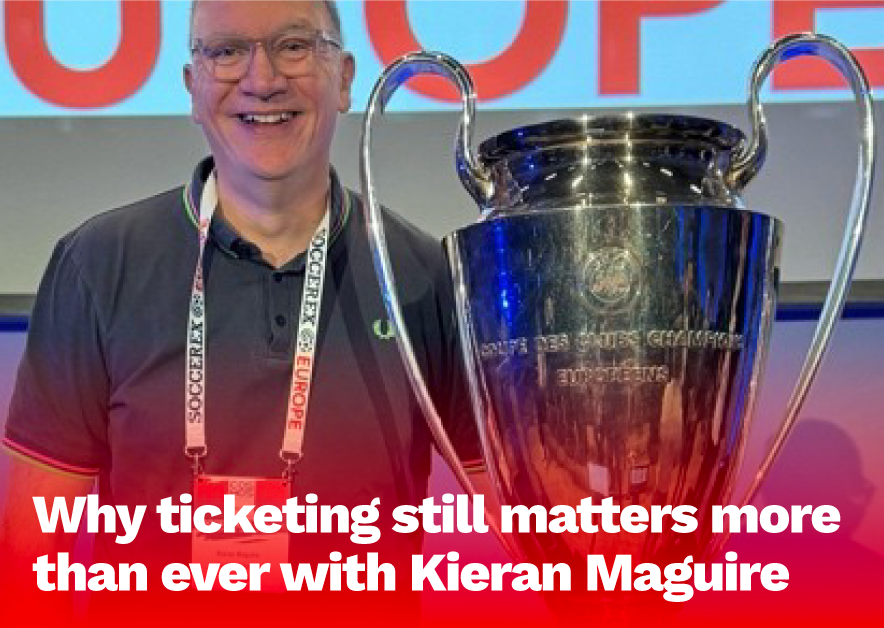
To explore why, we spoke to football finance lecturer, author, and podcast host Kieran Maguire one of the game’s leading voices on how money really flows through football.
Rather than starting with conclusions, we started with questions.
Q: What first drew you into football finance and why did football become the lens?
All of my lecturing career has been in the cities of Manchester and Liverpool, and football has been a central part of the culture of both cities. I quickly realised that teaching traditional finance topics through the lens of football club accounts was a great way to increase engagement with students. It is far easier to gain a student’s attention if we are valuing Manchester United or Liverpool that Microsoft or British Airways, so I used football as a Trojan Horse in terms of teaching.
Q: Looking back over the last 15–20 years, what are the biggest financial changes you’ve seen in football, and which of those have had the most lasting impact on clubs?
A: The biggest challenges in the game have been trying (and failing) to control costs. Since the Premier League started in 1992, consumer prices are up 130%, Premier League revenues are up 3,100%, which is superb, but wages are up 4,000% and transfer fees up 4,500%. The faster money comes into the game, the faster it disappears out!
Q: How has the balance between broadcasting, commercial income, and matchday revenue changed over time, and where does ticketing now sit in a club’s overall financial strategy?
A: In the first Premier League season matchday revenue counted for 48% of total, but by 2023/24 it had fallen to 14%, just £1 in every £7. Ticketing is still critical though, as clubs such as Manchester United still generate over £150 million in ticket revenues and this makes a substantial contribution towards PSR/FFP. Ticketing tends to be more important as you fall through the divisions as the impact of broadcast deals decreases.
Q: Financial growth has helped improve stadiums and global reach, but also driven higher prices. How do you think these changes have affected the match-going fan experience?
A: There is no doubt that the new stadiums at Spurs and Everton are amazing in terms of facilities and ability to watch matches without worrying about obstructions. Clubs have however had to recoup the capital outlay on construction costs through more aggressive pricing plans, and this has alienated some of the traditional fanbase. Clubs are certainly keen to offer more ‘experiences’ as opposed to just a cheap plastic seat, as demand, especially from those clubs with international fanbases, is for add on items that come at a premium.
Q: From a financial perspective, what principles should clubs follow when setting ticket prices to balance accessibility for fans with the need to maximise revenue?
A: We saw during Covid just how important a fan created atmosphere is to the overall product for both fans attending and the broadcast audience. The noise and passion from The Kop or the Gallowgate End is to be savoured and clubs need to ensure that they do not follow the route of revenue maximisation at the cost of creating too much of a diluted/sanitised environment through excluding local fans on restricted budgets.
Q:Many clubs now flex ticket prices depending on opposition, competition, or demand. What are the financial upsides and risks of this approach, and how can clubs avoid alienating supporters?
A: Most fans probably begrudgingly accept that a flexed/tiered pricing structure is a function of supply and demand, although the larger clubs can circumvent this is they are the main attraction themselves. There is a danger of fans, who tend to have very long memories, boycotting or protesting if the club is seen to be adopting a pricing structure that is purely based on relieving fans of cash due to the quality/reputation of the opposition.
Q: Beyond the ticket itself, what role do add-ons such as hospitality upgrades, food and drink bundles, merchandise, or experiences play in increasing matchday revenue, and how should clubs think about pricing these?
A: Bayern Munich estimate that 50% of matchday revenue comes from hospitality, and this helps to keep prices lower for regular fans, whilst still allowing Bayern to be competitive in terms of recruitment. It is noticeable that some clubs have a dozen or more price points at individual matches, and that is taking account of what has been seen in airlines and the broader entertainment industries where a small increase in the facilities offered can generate a significant increase in revenue per seat.
Q: How can clubs use data and technology to make ticketing teams more efficient while also improving the customer journey for fans?
A: Dynamic pricing is a sensitive issue, as has been seen by the Oasis reunion concerts (which still sold out) and the FIFA World Cup 2026 pricing (which again is highly likely to sell out). Using data to track demand can help ensure that matches are sold out, and being able to offer digital benefits during and at the end of matches in terms of special offers (eg Harry Kane scores for Bayern, and every fan called Harry can buy his shirt at a 20% discount at the end of the match) that are tailored to the individual fan.
Q: How do you see ticketing and matchday finance evolving over the next 5–10 years, particularly as clubs face tighter financial regulation and rising expectations from fans?
A: anticipate ticketing methodologies to become more sophisticated as clubs are able to offer a more personalised experience. The opportunity for clubs to partner with third parties for matchday experiences pre and post attending the stadium itself can create a more immersive matchday, although some fans will much prefer the old ways.
💡 Is your club ready for a game-changing transformation?
Learn more about JustTikit’s solutions and how we can elevate your ticketing experience. Contact our experts sales@justtikit.com for a free demo!


